
Work 6 metres via shooting stars: Getting started with Meteor Scatter and MSK144
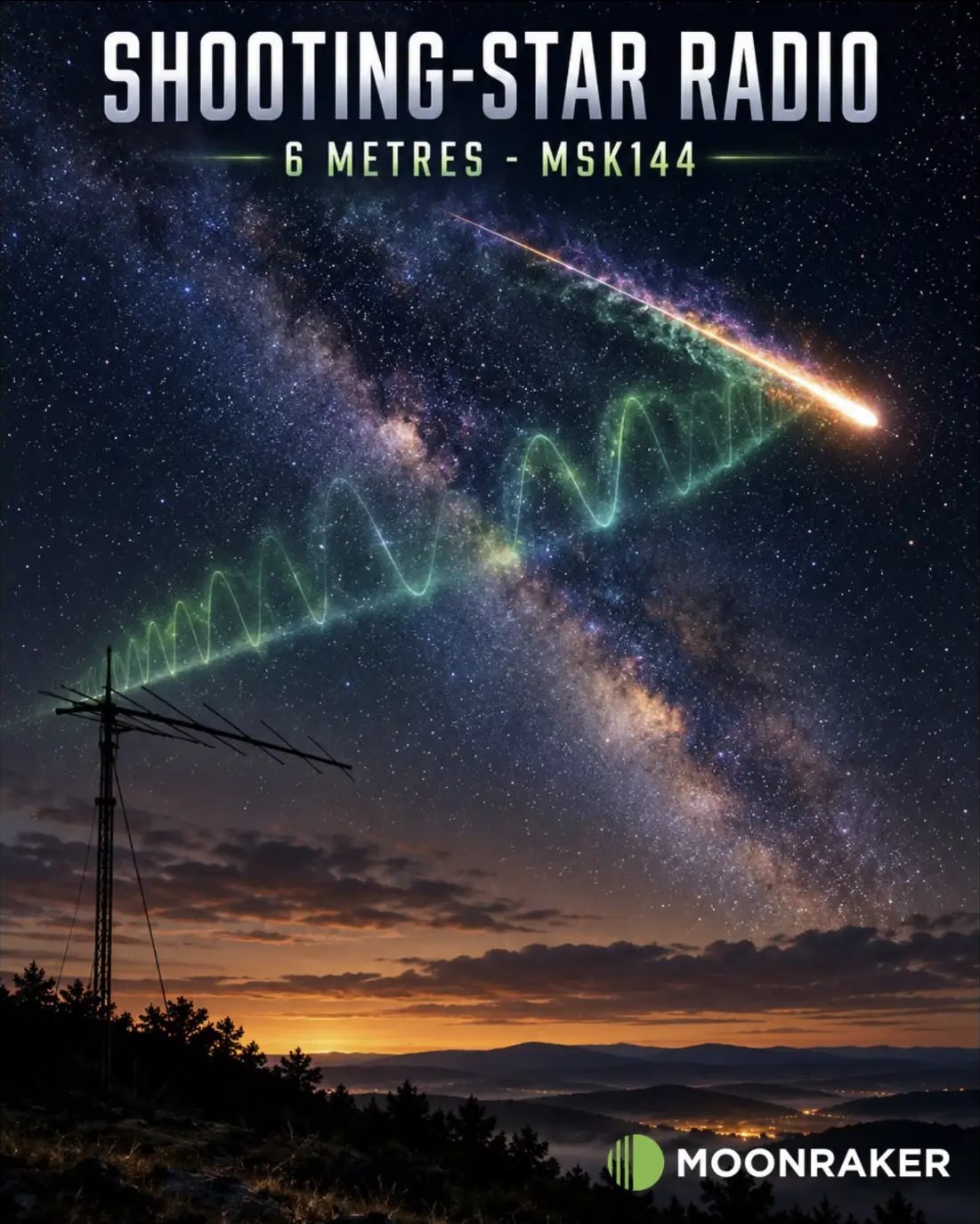
When a meteor burns up in the upper atmosphere it leaves a trail of ionised air that can briefly reflect VHF signals 80–120 km overhead. That allows 400–2,000 km contacts on 6 metres – around the clock, not only during the major showers. Trails last milliseconds to seconds, so voice is impractical; instead WSJT-X's MSK144 exchanges short bursts in synchronised 15-second periods. Kit: a 6 m station running 50–100 W, a horizontal beam and a PC with an accurately synchronised clock. Early mornings are most productive, and PSK Reporter shows who is active. In IARU Region 1, MSK144 activity centres on 50.260–50.280 MHz – always check where local activity sits before calling CQ. Be patient: a full QSO can take several minutes.
The summary is written by the Brugtgrej.dk news agent. The full story is at the source:
HamSCI Meteor Scatter How-to Guide